Engineering Human Biology with Microvascular Organ-on-a-Chip Technology

SynVivo’s science is grounded in advanced organ-on-a-chip technology that recreates realistic human microvascular environments for deeply predictive, human-relevant in vitro studies. Using physiologic flow, shear stress, and pressure gradients, our microfluidic chips enable real-time visualization of cell–cell, immune–vascular, and cell–drug interactions—capturing biology that static culture systems simply cannot.

Human cells grown in SynVivo chips maintain native morphology, barrier integrity, gene expression, and multicellular organization, providing in vitro data that more closely reflects in vivo human physiology. This supports global adoption of New Approach Methodologies (NAMs) and the advancement of human-focused testing aligned with the FDA Modernization Act.
Microvascular Engineering & Advanced Microfabrication

SynVivo integrates digitized microvascular imaging, precision microfabrication, and multi-channel microfluidics to produce in vitro systems with:

  • Physiologic microvascular geometry, flow, and shear
  • Reproducible vascular–tissue interfaces
  • Dynamic flow for transport, permeability, and transcytosis
  • Real-time optical access for high-resolution imaging
  • Low-volume effluent collection for cytokines, mass spec, biomarkers
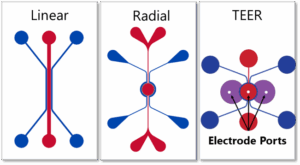
  • Compatibility with TEER, automated flow controllers, and high-content imaging
  • Bubble-free chip conditioning via pneumatic priming

These engineering elements create human-relevant models that preserve biological fidelity while enabling systematic experimentation.

Microvascular Chip Architectures (SMN & IMN)

SynVivo offers two microfluidic chip architectures depending on biological and experimental needs.

Imn idealized chips

IMN — Idealized Microvascular Network Chips

Used for: BBB, ALI lung, cornea, standard toxicology, controlled transport assays
IMN chips are engineered with precise linear or radial microchannels that generate uniform shear stress and highly reproducible flow conditions. Idealized geometries ensure:

  • Standardized barrier formation
  • Consistent transport/permeability behavior
  • Tight junction performance suitable for TEER
  • High reproducibility across chips and experiments

This architecture is essential for applications requiring tight endothelial barriers, including the SynBBB™ blood–brain barrier model.

SynTumor Microvascular Chip Schematics

SMN — Realistic Microvascular Network Chips

Used for: Tumor, inflammation, vascular toxicity, complex tissues
SMN chips are built using microvascular patterns digitized directly from real tissues, preserving biologic branching, curvature, and heterogeneity. These chips support:

  • Native-like immune cell rolling and adhesion
  • Physiologic vascular leakiness
  • Tumor angiogenesis and microenvironment interactions
  • Complex morphology required for multi-cellular crosstalk

SMN architecture is ideal for studies where physiologic complexity enhances model fidelity.

Realistic 3D Tissue & Organ-on-a-Chip Models

SynVivo platforms recreate the morphology, physiology, and immunocompetence of human tissues and organs, with capabilities including:

  • Endothelial–epithelial–stromal crosstalk
  • Innate and adaptive immune cell interactions
  • Tissue-specific shear and flow conditions
  • Dynamic barrier function and drug transport behavior
  • Multi-organ linking for systemic studies
  • Real-time visualization of cellular and molecular dynamics

These features result in platforms that more accurately depict in vivo microcirculation and human biology than traditional static systems.

Available Organ-on-a-Chip Models

synvivo synbbb

SynBBB™ — Blood–Brain Barrier-on-a-Chip

Human or rat BBB models for permeability, BBB transcytosis, viral/antibody transport, neuroinflammation, and barrier integrity under controlled shear.

SynTumor -Endothelial Interactions

SynTumor™ — Vascularized Tumor-on-a-Chip

3D tumor microenvironments incorporating endothelial, stromal, immune, and cancer cells for drug penetration, angiogenesis, metastasis, and immune engagement studies.

synvivo synali alveolar lung model

SynALI™ — Air–Liquid Interface Lung-on-a-Chip

Physiologic mucociliary airway structure for respiratory toxicity, pathogen infection, barrier repair, aerosol delivery, and inflammation modeling.

synvivo synram

SynRAM™ — Inflammation-on-a-Chip

Real-time assays of immune rolling, adhesion, migration, cytokine activation, and vascular inflammation using monocytes, neutrophils, PBMCs, or engineered immune cells.

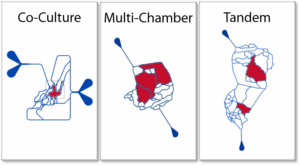
synvivo syntox 10x co-culture

SynTox™ — Toxicology-on-a-Chip

Multi-organ toxicology systems including liver, cardiac, lung, and vascular toxicity under flow for predictive safety and mechanistic toxicology.

SynOcu Cornea Chip

SynOcu™ — Cornea-on-a-Chip

Stratified corneal epithelium for ocular irritation, permeability, toxicity, wound healing, and topical drug delivery.

Custom Organ-on-a-Chip Design for Any Tissue or Disease

SynVivo offers rapid prototyping and custom model design for:

  • Specialized organ structures
  • Disease-specific mechanisms
  • Microvascular patterns
  • Immunocompetent environments
  • Multi-organ interactions
  • High-content mechanistic studies

Our engineering and biology teams work closely with partners to recreate unique physiological structures and disease microenvironments tailored to project needs.

Scientific Validation & Publications

SynVivo technology is supported by a robust collection of peer-reviewed publications demonstrating:

  • Superior physiological relevance vs. 2D culture
  • Accurate microvascular barrier function and transport behavior
  • Predictive toxicology outcomes aligned with human data
  • Immune–vascular and tumor–vascular interactions consistent with in vivo trends
  • High reproducibility across flow-based experimental conditions

This validation establishes SynVivo as a leading solution for human-relevant, mechanism-based preclinical testing.

Intellectual Property & Regulatory Alignment

SynVivo technology is protected by an extensive patent portfolio covering:

  • Organ-on-a-chip architectures
  • Vascular–tissue interfaces
  • Barrier transport and flow technologies
  • Disease-specific microphysiological models

Our systems support the adoption of NAMs, comply with the direction of the FDA Modernization Act, and align with global regulatory momentum toward non-animal, human-relevant testing strategies.